
Sub-Total: $0.00
Construct With Confidence
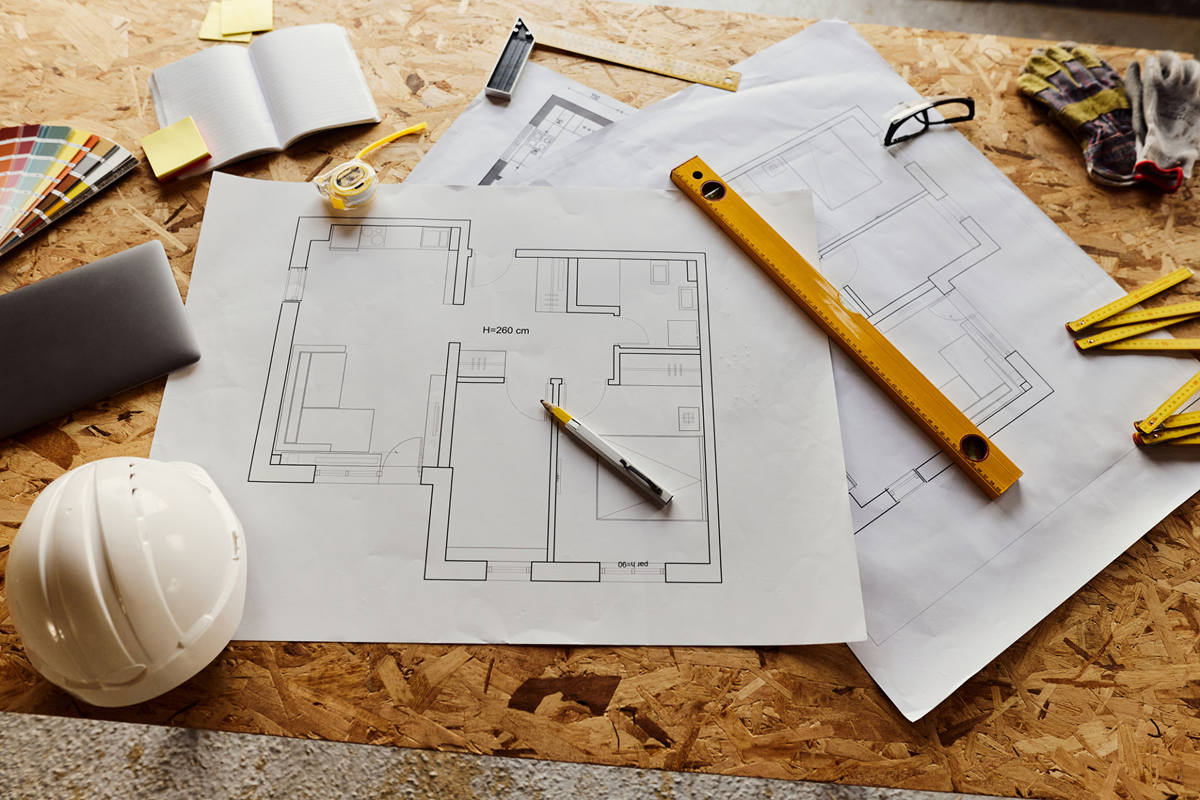
New Home Construction Guide
Have you thought about being your own contractor and building your own home?
“Where to Start”
A suggested “Cost breakdown” is uploaded to this site to help with calculating the cost.
What is an “Owner Builder?
An owner builder is a person who is not a licensed building general contractor who will be building the house as the contractor. The owner builder will be responsible for obtaining the building lot, building permits, and managing the construction or doing the work them selves. The owner builder is responsible to be sure that all improvements (work on the buildings and lot improvements) meet all regulations and building codes are in compliant with state and federal laws.
In these pages are an overview of things I have learned as a Licensed General Contractor. I am nearing retirement so I want to pass on some of the insights and knowledge that I have gained through my years as a home building career. Hopefully the knowledge I share will be of help as you oversee the construction of your new home.
These pages are designed to help you manage the construction process and what kind of subcontractors you will need and a general description of the subcontractor and what they do. This page doesn’t include how to do manuals or text books to teach you how to do each of the trades, contractors either go to school for several years or work in the trades for several years before they become eligible to become licensed contractors.
There is a lot of information and on line help that can help with most of that. If you are just starting with little or no knowledge or experience be aware that there is a long and possibly very difficult learning curve. Building a house is not an easy project.
Hiring a contractor is expensive typically asking around 10% to 15%, A $500,000.00 house will cost in contractor fee’s about $40,000.00 to $75,000.00.
If you study the information on this website, follow the sequence, Have the determination. You should be able to manage your own project.
Disclaimer: This information is only a basic guide, no guarantee is stated or implied. Your success is entirely up to you.
Do You Have a Building Lot?
Some things to consider when looking for a building lot.
Will the house you want to build fit the Building lot. You might want to check with the Building Department to find out what their requirements are. Most cities have requirements how far from the property line the house needs to be, both from side to side and front and back. These are called “Set Backs” How far back from the street or sidewalk the city or county requires the house to set.
Do you have utilities either in the lot or available close by? What are utilities?
Utilities include Water, Sewer, Power. Other utilities may include Phone Service, Communications such as fiber optics. Cable.
If you are looking for a building lot you should do some research to determine what utilities are available. The availability of utilities can be a major determination of the cost of the building lot.
If the utilities are a distance from where the house will be built it can be much more expensive, you should obtain these costs prior to purchasing the property.
If you are working with a Real Estate Realtor you will encounter terms like “Stubbed” or “Available”. Are they already installed (stubbed) into the lot? (Developed building lot) or are they available in the street? (Undeveloped lot but utilities are close by) When you are talking about a “Building Lot” you are usually talking about a “Subdivision” or a small parcel of land that an owner may have divided of from his/her existing property. Lots are legally surveyed, divided and registered with the City or County Building Department.
If you are purchasing land that hasn’t been subdivided you will encounter a whole different set of rules. Some utilities may not be available, others may be a long distance from where you intend to build. Utilities that commonly are not available may be “water, sewer, and natural gas” and occasionally even “Power”
To solve the problem of no utilities you may need to drill a well for water, Install a septic system, build so you will be using propane, or other heating and cooking fuel
Drilling can become very expensive and prohibitive if there is even water under the land at all.
For a septic system you may be required to perform a “perk test” which is done by digging a hole in the ground (in our area 10′ deep) then putting water in the hole to see how long it takes for it to seep into the ground. This helps to determine the type of soil and water table. Some soils may have a lot of clay which won’t allow the water to disburse prohibiting the use of a septic system.
You may also be required to have a “soil test”. Soils may be unstable and may require stabilization. Building on unstable soil will eventually cause problems such severe endless settling which can cause cracks in the foundation. Building on unstable soil has been known to totally destroy houses.
The condition of the lot can dramatically impact the cost of building on it.
Pay attention of things like the terrain, is it reasonably level or does it slope, if it slopes how much? What is the relationship of the lot to the street? Is it on a hill above the street? Is the lot below the street? Is it even with the street? You may need to cut into the hill or bring in fill before you can build the house. Excavation can be expensive.
Before you make any serious decisions try to get prices (quotes/estimates)
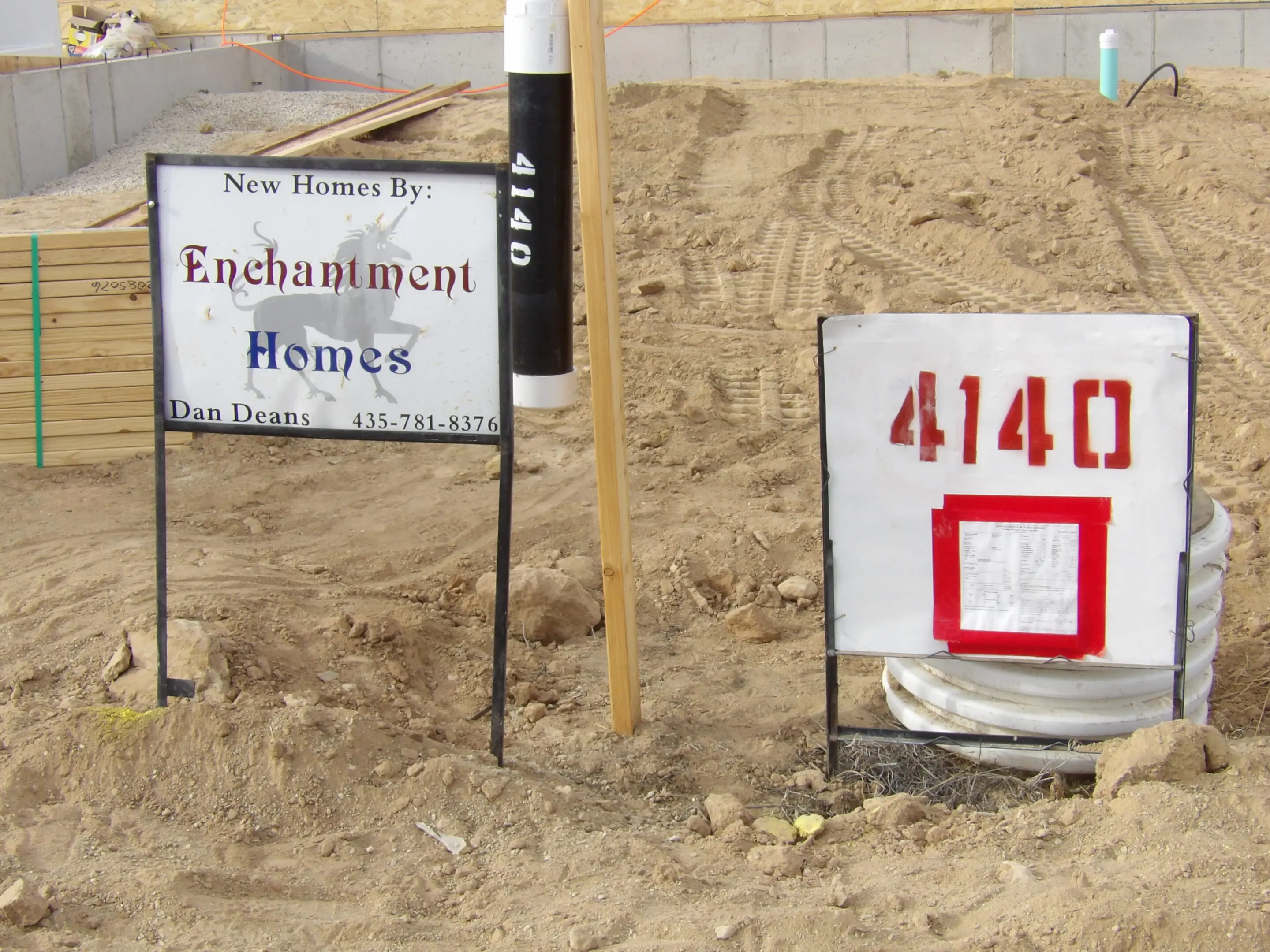
HOA means Homeowners Association, a private organization in planned communities that creates and enforces rules (CC&Rs) for properties, manages common areas (pools, parks), collects fees (dues) for maintenance, and aims to maintain property values by ensuring a uniform appearance, though residents often have mandatory membership and can face fines or even foreclosure for violations.
CC&R’s are not unique to an HOA, Some subdivisions may have CC&Rs with out being an HOA
HOA’s and CC&Rs are usually registered with the County or City.
Do You Need a Loan?
Loans can come in many different ways. Bank loans, private loans, loans against existing assets. etc. Depending on which type of loan the interest rates can vary. Also requirements from entity to another may vary. Ask plenty of questions and be informed when applying for a loan.
As far as construction is concerned there are two main types of loans,
1. Construction Loan.
2. Long term (mortgage) loan.
There are also different types of lenders,
1.Traditional Bank or Credit Union lender, Private Lender, Government Lender (Low income subsidized) Home Equity Loan, (HELOC) Construction loans are temporary loans for the duration of the construction and are usually at a higher interest rate. Most bank construction loans are charged interest on the portion of the loan that has been drawn, For example if you make your first draw to pay the excavator and the draw is for $20,000.00 but your construction loan is for $400,000.00 you will start to pay interest on $20,000.00.
As you progress and make more draws you will be charged interest on what you have spent. So as you spend more money it will cost more interest. So the farther along you are the more important it will be to get the job done.
Some private lenders will charge a percent of the amount of the entire construction loan up front. This may be an advantage if it will take a longer time to build Either way you will need a “cost breakdown”.
Building Permit
Once you have properly researched the lot conditions and purchased the lot you will be required to purchase a building permit. This is done by going to your local Building department, Also called the Planning and Zoning department or Community Development department.
In order to obtain a permit you will need at least one full set of detailed plans, (Blue Print) Plans include floor plans for all floors, Foundation plan. Elevations, (Views of all four sides of the house) Framing, electrical, plumbing, HVAC.
Certain locations may require more detail concerning disaster mitigation, Example: Earth quake zones, Flood zones. Frost protection requirements.
Res Check. What the heck is a Res Check? A Res Check is calculations determining energy usage of the house, Window sizing, What type and thickness of insulation, Attic space, In our location the building department requires an air pressure test, You have to close all doors and windows and pressure up the house to determine how much air is being lost from the interior of the house. If you think some of these things seem silly to you, I agree. The requirements call for a structure that is sealed so tight as to prevent energy loss that the home is uninhabitable. So then if it is too tight you have to buy more equipment to bring in breathable and warm the air from outside. Who needs oxygen anyway?
Inspections
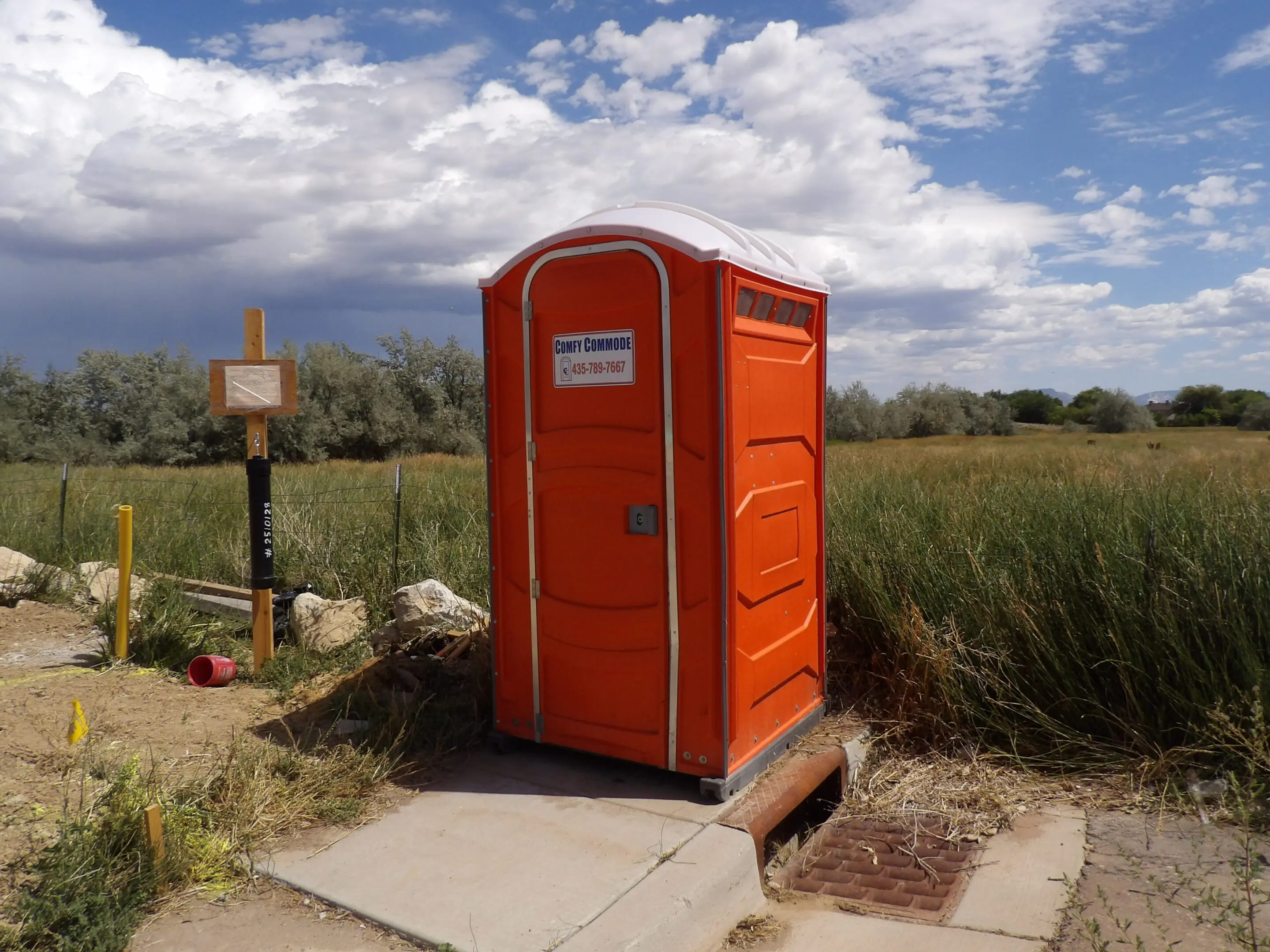
As you proceed through your building process some parts of the construction process require inspections to insure they meet building codes. Originally these were “Safety” inspections but now they have expanded to other areas such as “energy”. Completion Or aesthetics
Common inspections:
Footing & Foundation inspections: Determines correct re-bar installation is done correctly.
4-Way inspection: (Mechanical) A multiple part inspection covering Framing, Plumbing, HVAC, Electrical. This probably should be a 5-way inspection because in recent years many areas are now requiring window installation inspections also.
Window and Door installation inspection: Are required to have Window A Door flashing installed during installation.
Roof Underlayment Inspection: The roof typically requires two layers, the underlayment layer and the final covering,
Drywall: Check for nail or screw placement.
Final inspection: Ensure all elements of the house are are completed correctly.
Other types of inspection may be required for certain circumstances depending on conditions of location or local building codes. For example, in earth quake prone areas a size-mic or energy inspections may be required.
Some parts may not necessarily be governed by building codes or may not be visible to the inspector. Just because you “got away” with it doesn’t make it OK. Poorly or improperly, done work can still pose danger to the residents of the house. or reduce the life span of the house.
Drywall: Check for nail or screw placement. This inspection may not be required, check with your local building department.
Excavation: Laterals such as Water, Sewer, Electrical are required inspection items. Typically the excavator calls for the inspections when the trench has been dug and pipes and conduit are installed and ready to back fil the trench.
Final inspection: Ensure all elements of the house are completed correctly.
Other types of inspection may be required for certain circumstances depending on conditions of location or local building codes. For example, in earth quake prone areas a size-mic or energy inspections may be required.
Some parts may not necessarily be governed by building codes or may not be visible to the inspector. Just because you “got away” with it doesn’t make it OK. Poorly or improperly done work can still pose danger to the residents of the house. or reduce the life span of the house. Ultamatly the Home owner is the one who looses.
Subcontractors
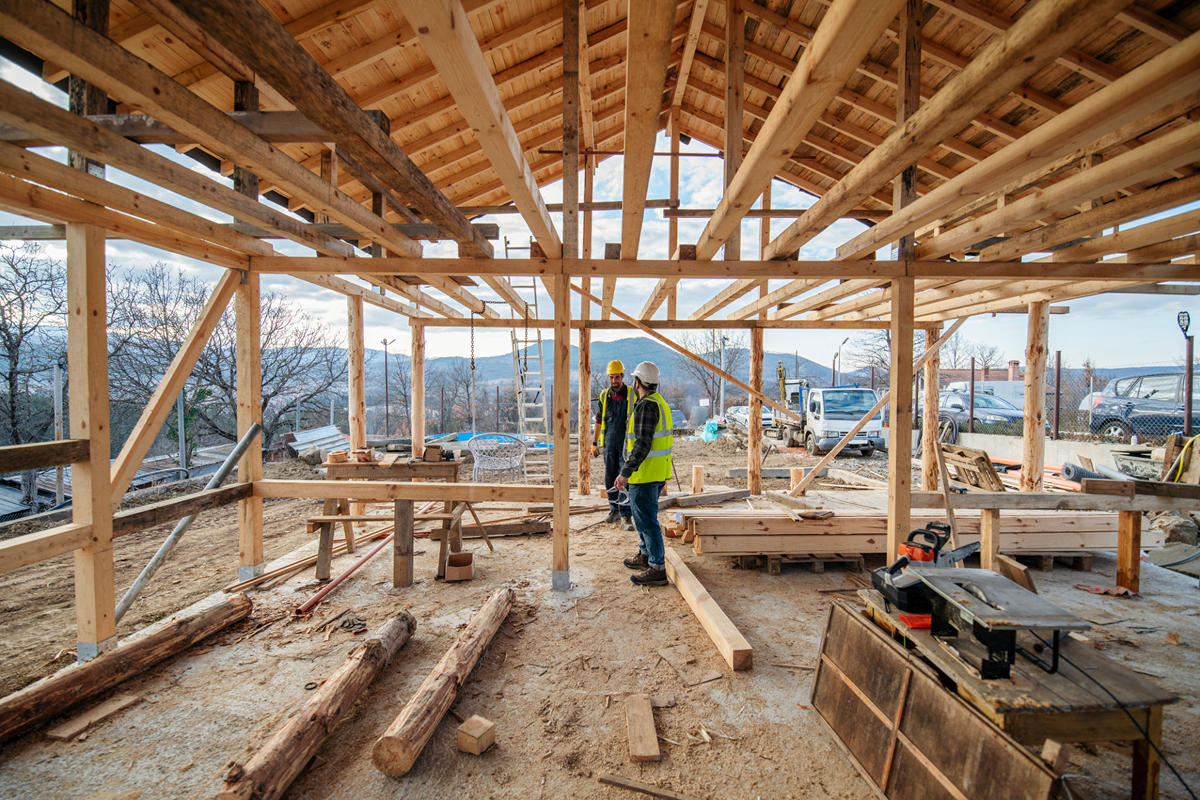
Subcontractors are the various trades people you will need to hire for performing work on your house. Prior to awarding the contract to a subcontractor you should be sure they are legally licensed and in some cases they may need to be bonded (bonding is usually required for commercial building)
As a home owner you may perform any or all of the work your self, however you are still required to meet all code requirements. Also if you are doing the work or having friends, family, or other non licensed persons you assume FULL responsibility and liability for any thing that may not be done correctly.
Excavator
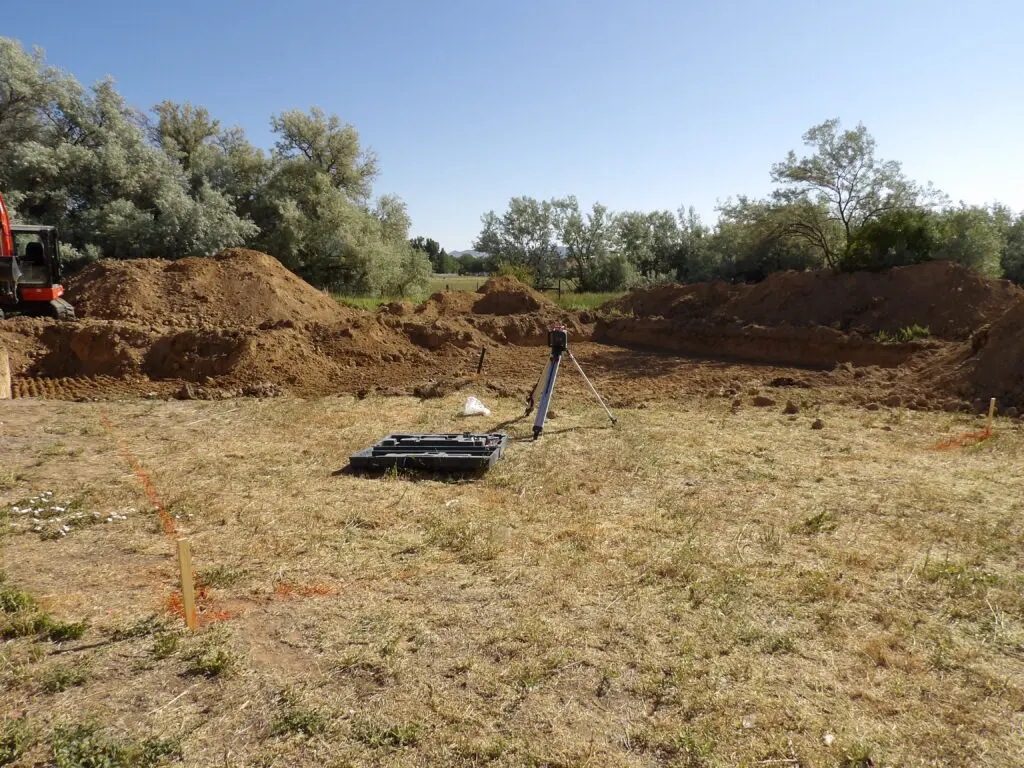
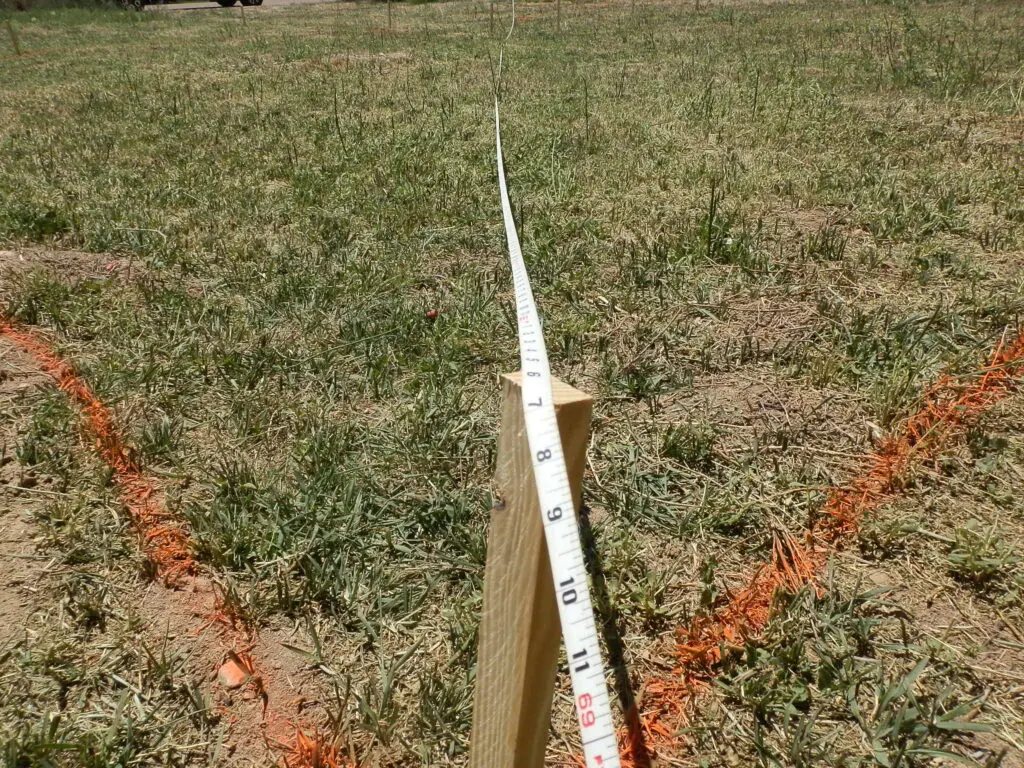
An excavator performs the earth work such as digging the hole and back fill, as well as installing laterals, Water & sewer, power, exterior electrical, gas lines. etc.
Concrete Contractors
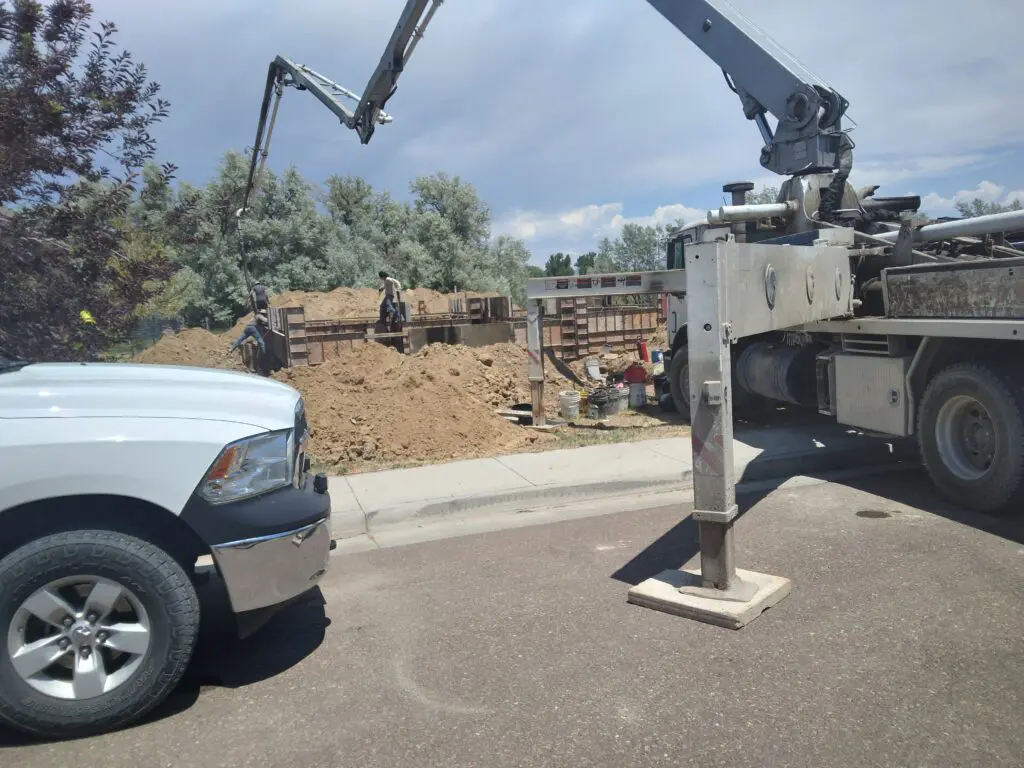
A concrete contractor installs footings, foundation, floors, driveways, walkways, curb & gutters. etc.
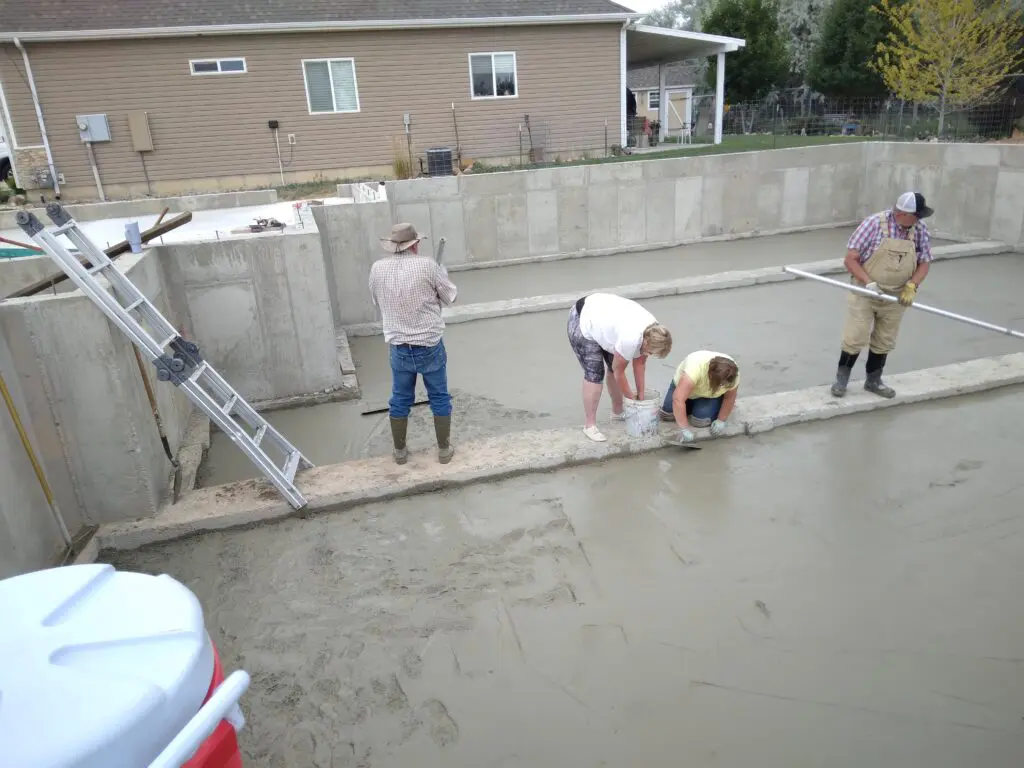
Concrete floors usually means “slab on grade”. Slab on grade is when you install concrete floor directly on the soil surface. Example, Basement floors and garage floors. Basement and garage floors are typically installed after the foundation.
Occasionally a floor which in incorporated with footings called a Mono pour may be desirable. This simply means that the soil is dug deeper around the perimeter rather than footings and foundation. Mono floors are more common for buildings like a barn, detached garage, shop, storage building, and in certain areas where frost isn’t an issue.
It is always a good idea to check with the building department in your area to determine what is acceptable in your area before proceeding. In areas of the house where there will be bath rooms or kitchens underground plumbing and heating may be required prior to installing the concrete floor.
Framing
Framing is building the frame “bones” of the house. The foundation and the frame supports every thing else for the house.
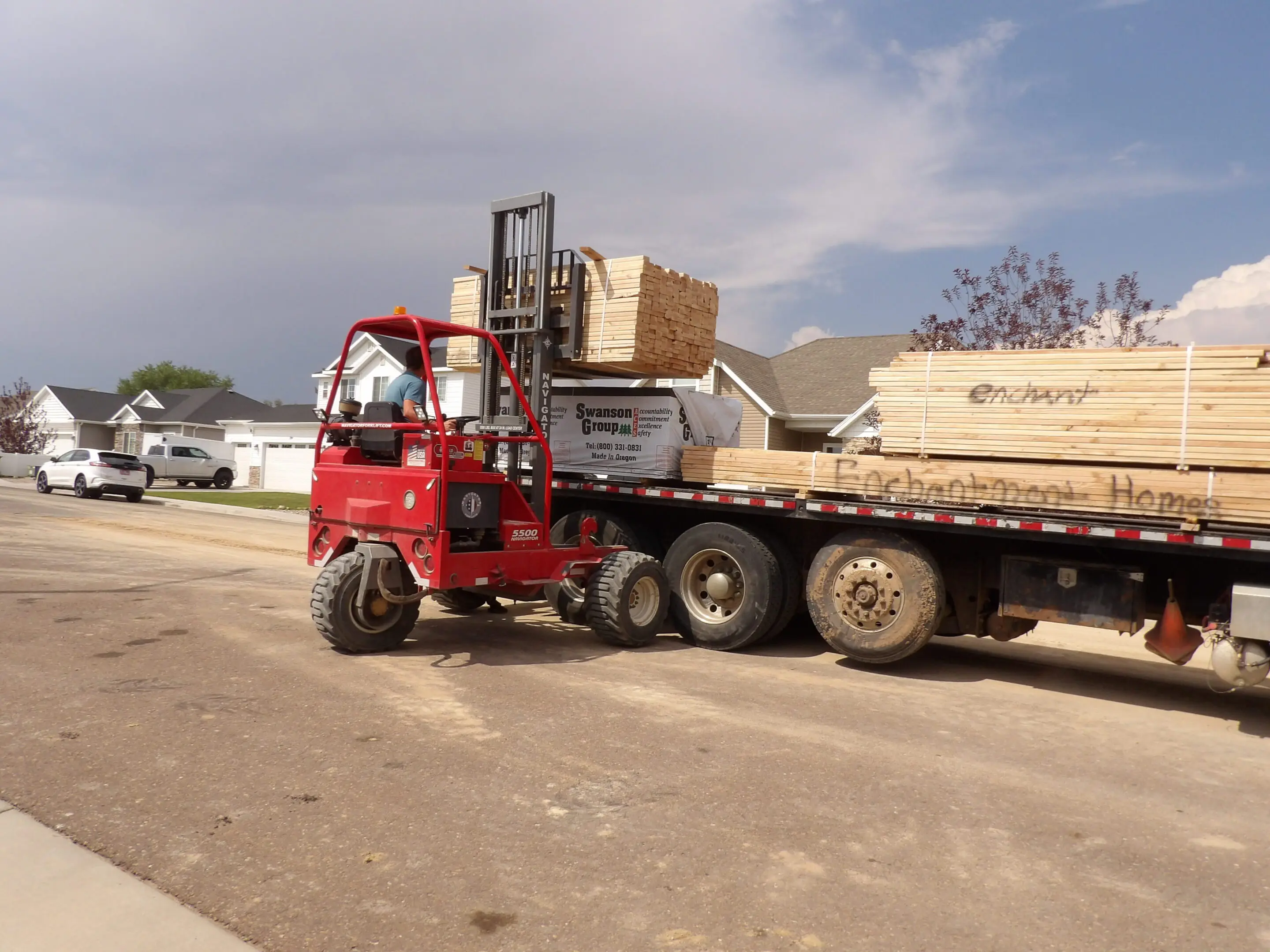
Framing Is anchored to the foundation, commonly consists of basement or crawl space framing, floors, floor plan dividing rooms including exterior walls, roof framing, framing to support plumbing, electrical, HVAC. , Wall framing supports roof framing, Roof framing may be of various types of roof support, such as trusses, rafters, or other roof supporting methods.
Traditionally wall studs are spaced at 16″ on center. Some codes allow for exterior walls to be spaced at 24″ on center.
A recent housing trend is “barndominiums” that use barn or “Post and Beam” style framing which is typically used for out buildings such as detached garage, barn, storage etc. Post and beam framing is typically consists of pressure treated posts that extend into the ground up to the top of the wall and typically spaced at 6′ on center. Then horizontal boards called girts typically 2 X 6 lumber are spaced at 24″ on center. Barn housing typically utilizes a concrete floor. Roof trusses are typically spaced at 4′ on center with girts same as walls. Post and beam doesn’t use sheathing for walls or roof, construction is typically designed for steal roof and siding application.
If creating living space in a barn residential framing for the living space will be required, example, studs will be required between the posts and interior walls will require studs placed at 16″ on center. Any mechanical will need to be in place prior to installing the concrete floor. Post and Beam constructed buildings have a considerably shorter life span than traditional building types.
Other types of framing may be such as:
Foam blocks, usually used in place of concrete walls.
Sips, which are made of Styrofoam sandwiched between layers of sheathing (OSB) which are ordered built in a factory according to the house plans. When you order these what you get are the shell of the house, the exterior walls, floor and roof framing. You still have to purchase all of the interior lumber They are great for energy efficiency but they are very expensive, In my opinion is standard framing and spray in foam is about as efficient and much less money.
Before choosing to build with post and beam for residence check with your local building department to see if they are allowed and what special considerations may be required.
A framing inspection will be required, it is usually done with the mechanical.
Mechanical
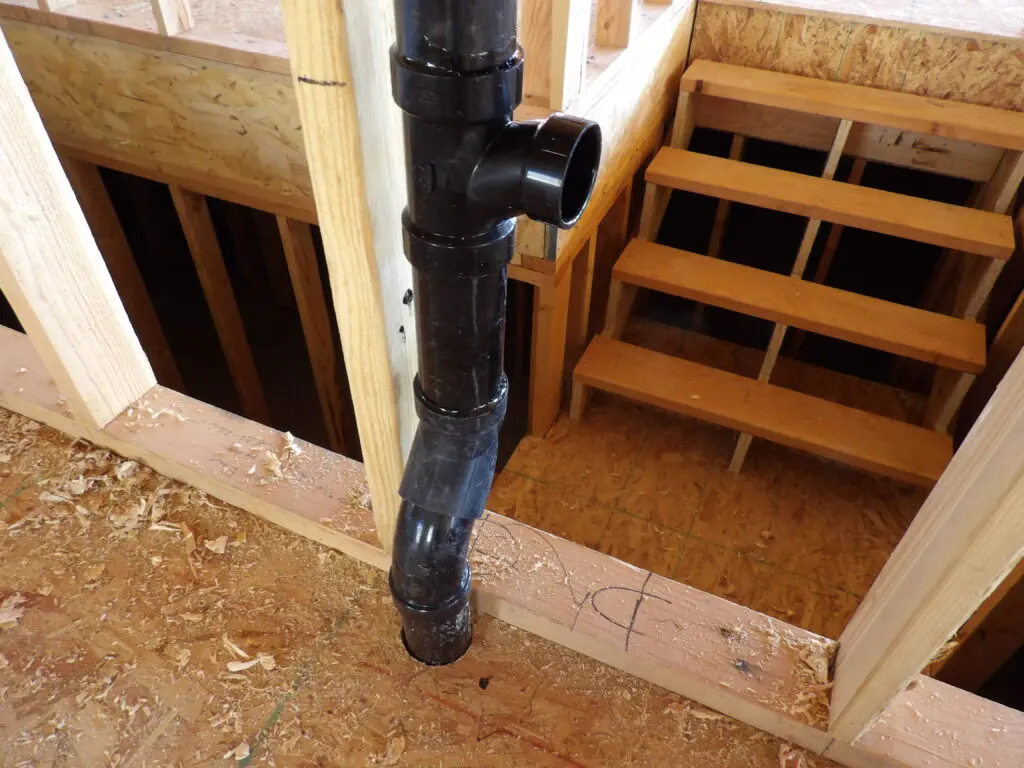
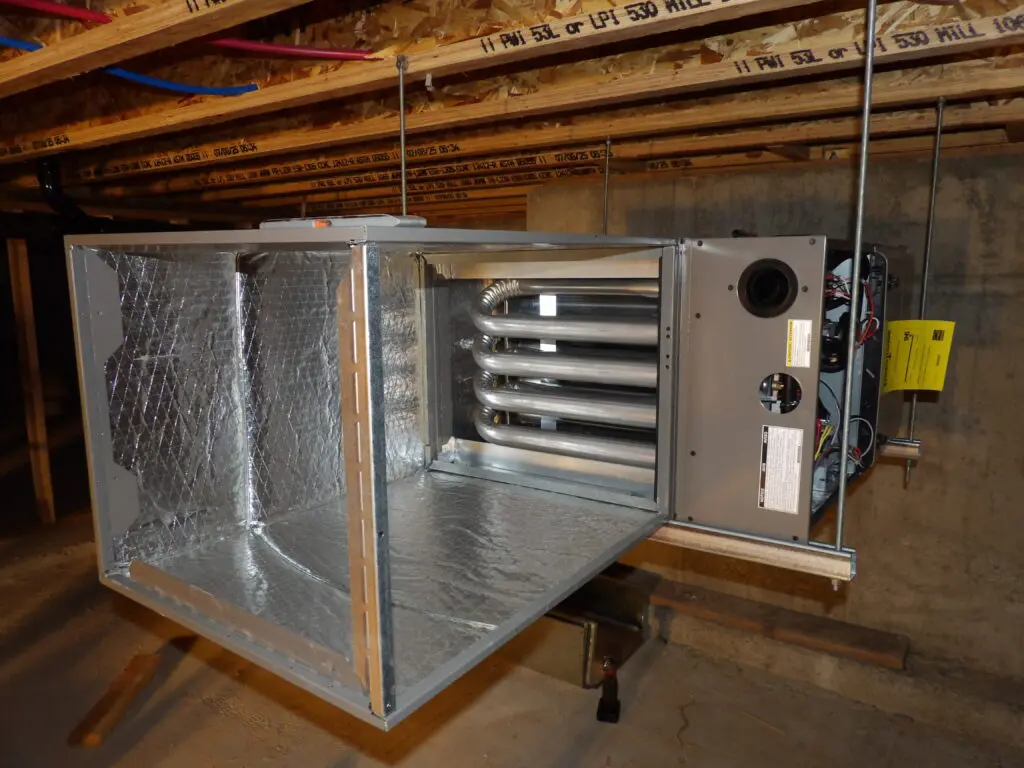
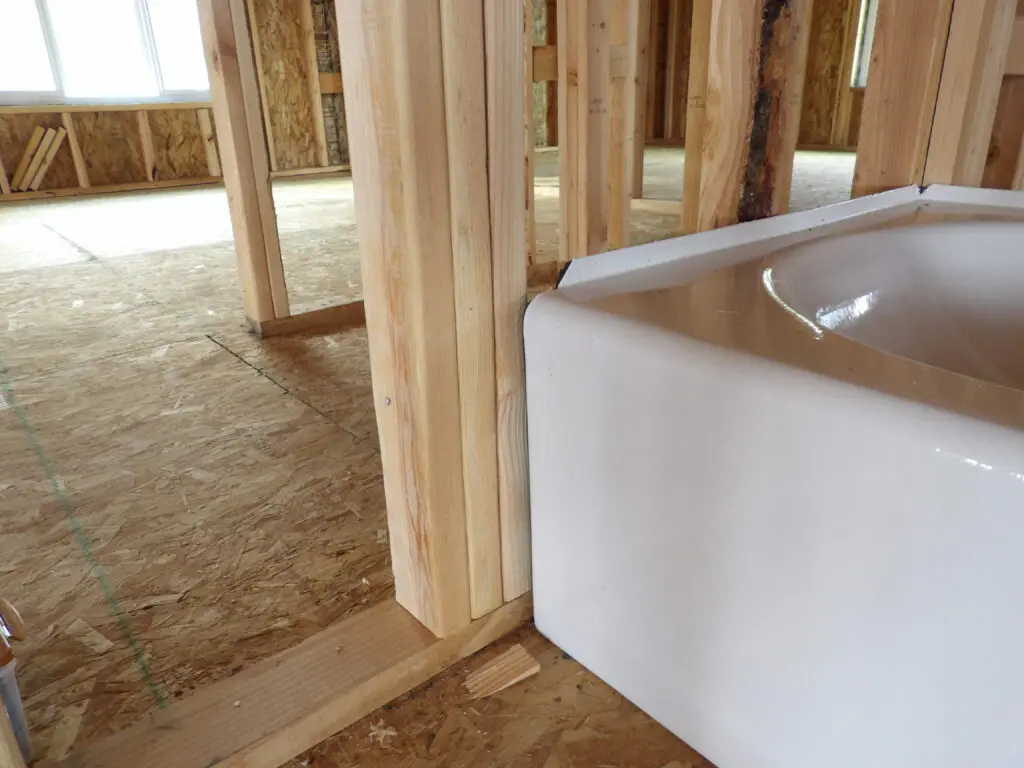
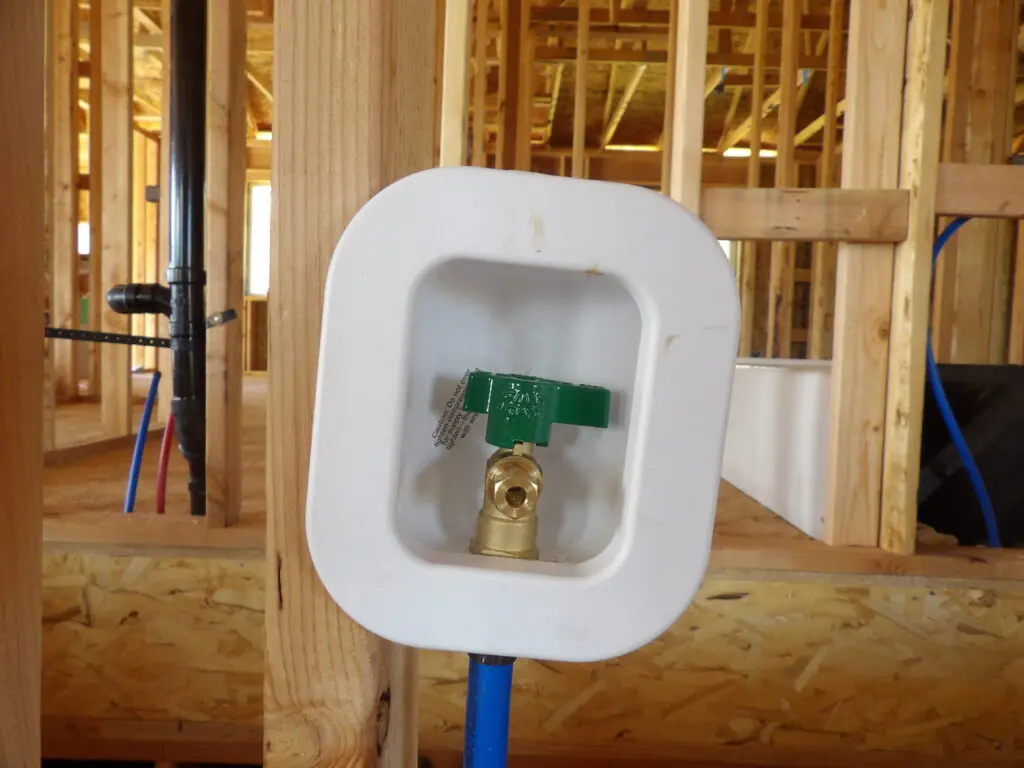
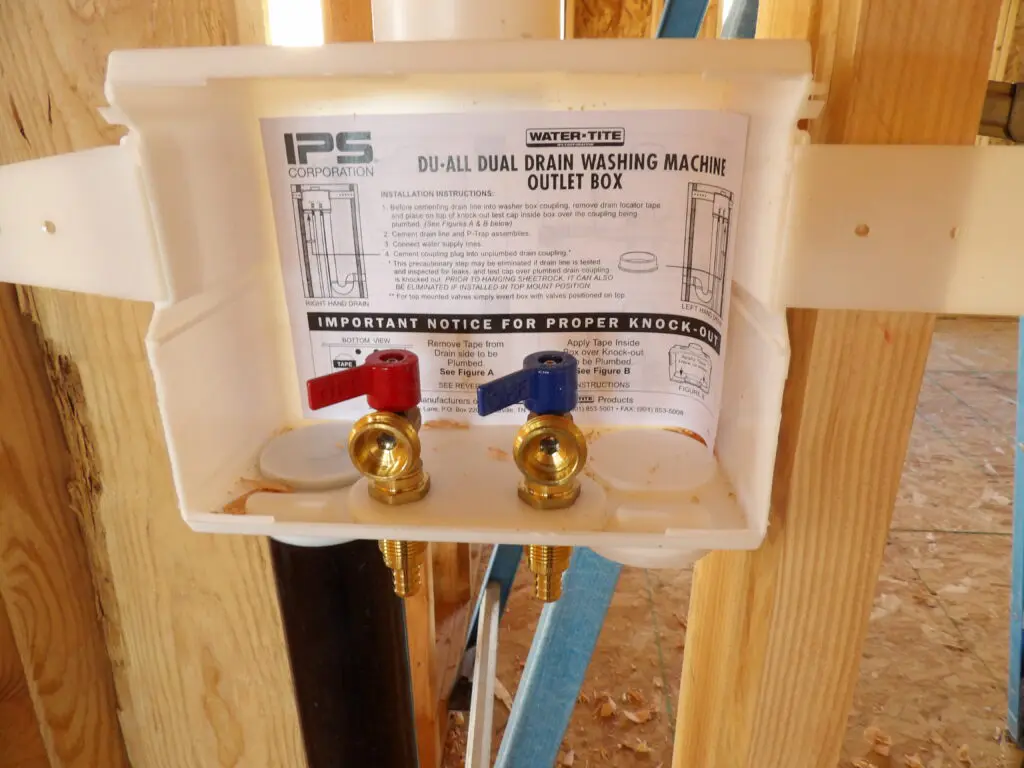
The mechanical portion of the building consists of HVAC, Plumbing, and Electrical. I suggest you schedule HVAC first because of the location required for furnace location and duct work. Next Plumbing appliances such as toilet, shower, and sink drains, piping require specific locations. Electrical wiring can be routed around HVAC ducts and plumbing piping. Home owner are typically allowed to do the mechanical, if the owner does install the mechanical they still have to meet building codes that apply. If you have a friend that claims to know how to do the mechanical work but is not licensed it is not legal for you to allow him to do the work. You should also be aware that the liability will be the responsibility of the owner. Just because you can doesn’t mean you should. Some things are better left to the professionals.
A mechanical inspection will be required. Do not proceed until the inspection is passed.
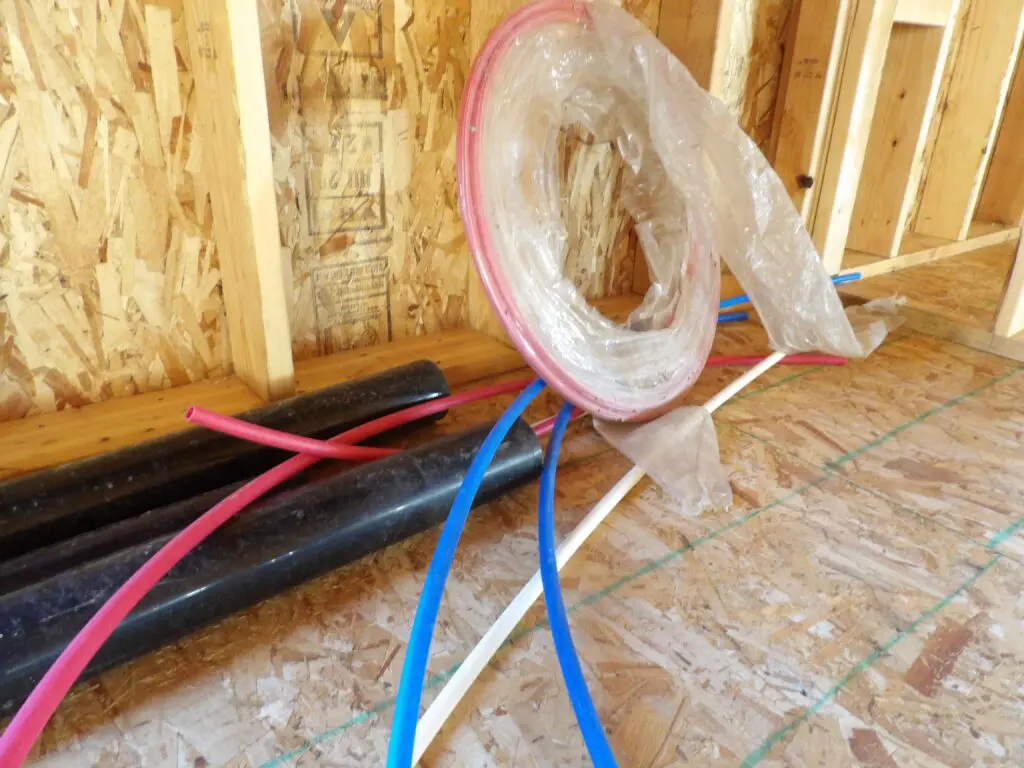
Insulation
There may be different insulation requirements for different locations because the climate differs from location to location.
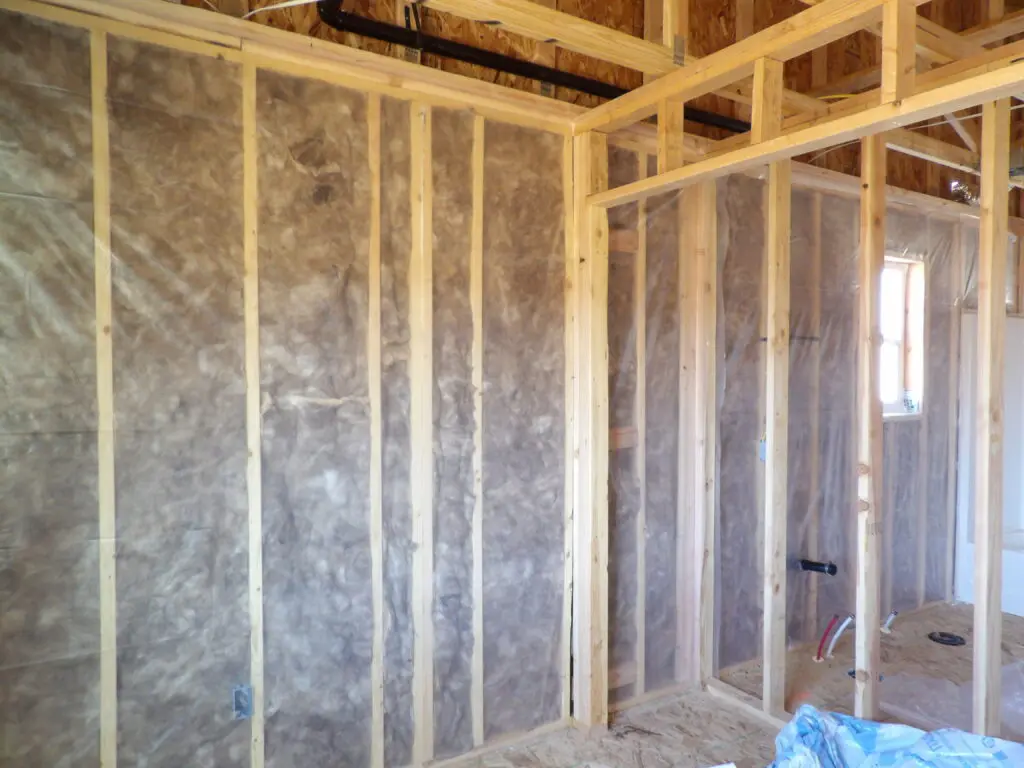
There are many types of insulation, the most common being fiberglass roles or bats. Roles usually have paper “craft faced” and are designed to be attached to the studs.
Bats are cut to the length, usually 92″ for standard 8′ walls and may not have the paper, these are designed for friction fit. If they don’t have paper you will need to install a continuous plastic sheathing vapor barrier over the insulation for the entire wall. Check with your building department for which energy rating is required in your area. (R-11, R-19, R-21 etc.}
Other types of insulation may be “blow in cellulose, blow in fiberglass” I don’t recommend blow in insulation for walls, because over time it will settle leaving cavities at the top inside the wall.
Wet cellulose has glue mixed with it and is sprayed into the wall cavities then covered with plastic sheathing, the glue makes it hold its place and adhere to the sheeting and studs creating a well sealed insulation. Wed cellulose is inexpensive and gives the best value for the money.
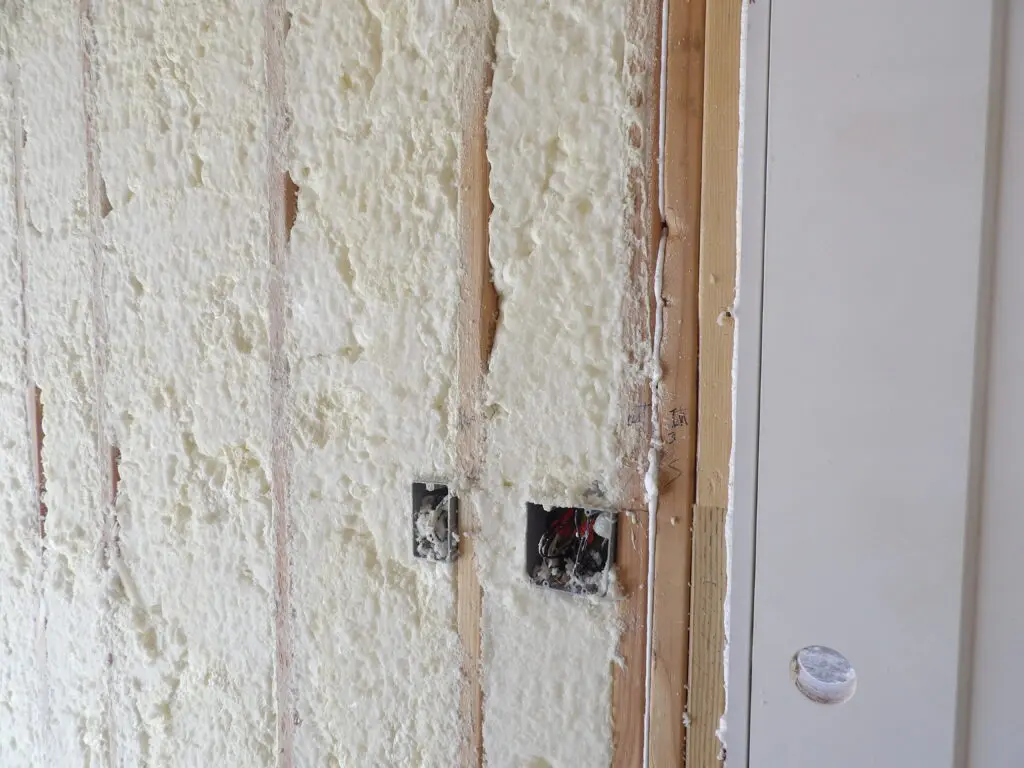
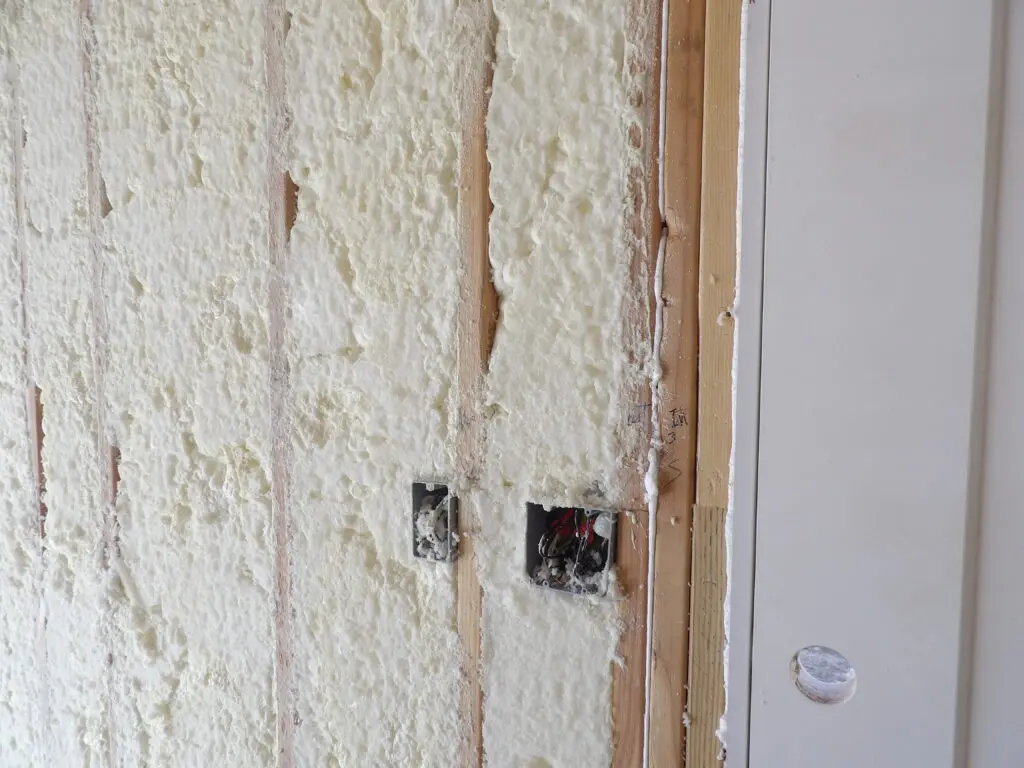
Foam insulation is much denser than cellulose which gives a greater R value for the same space which may make it more desirable for colder climates. Foam has the added value because it adheres better to the studs and sheathing and seals around outlet, switch boxes and other areas that are prone to air movement into or out of the structure. Foam makes the wall more rigid which makes it more stable, it also is a better sound barrier which is nice if you live near a busy street. Foam is considerably more expensive than cellulose, but in certain conditions where heat loss is a consideration it will pay for its self over time.
If possible it is best to have the exterior cover (siding, brick, stone, stucco) installed before sheet rock, The pounding with hammers or percussion from nail guns can cause mud that covers the nails or screws to pop off requiring drywall repair or if it is after paint repainting.
Roofing
A Roof is typically made up of two layers, the underlayment or commonly referred to as the “Dry in” layer’ Requirements for the underlayment layer may be different in different areas. In cold climates the underlayment layer may require a layer from the eves a specific distance up from the eves of a material that prevents ice from backing up under the shingles commonly referred to a Snow & Ice shield. during freezing temperatures. In cold climates when water from rain or snow melt water runs down to the edge of the roof and off to the ground. Under certain conditions when the water encounters the freezing temperature of the air it will freeze and form Icicles. When this happens, the ice can get under the shingles and work their way up the roof under the shingles. When that happens water can leak through the plywood or (OSB) sheeting layer. To make things worse is the water gets in the insulation and holds in the attic until it becomes heavy and softens the sheetrock ceiling, then it either leaks or the ceiling can fall.
The final layer commonly called the “Shingle” layer. Uncovered underlayment when exposed to sun and elements will only last for a few months, it is designed to be covered by a shingle layer. Shingles are where the long term protection occurs. Because Shingles are the layer that everyone sees there are many types and styles of shingles which adds to the beauty of the house.
The most common are asphalt shingles, The ones with fiber reinforced tar with colored sand on the surface. Most asphalt shingles are “Architectural” shingles which mimic the wood shingles, Architectural shingles have mostly replaced the old “3 Tab” shingles and for good reason. Architectural shingles are much more durable which last longer and are less likely to blow off in the wind. Architectural shingles are available in a wide variety of colors.
Shake shingles are wooden (cedar) shingles commonly used in more expensive homes because of their beauty. Properly installed and maintained Shake shingles will out last asphalt shingles.
The biggest disadvantage is the wood dries out then they are more flammable, if a fire starts in the neighborhood and a spark lands on the wooden shingle it may catch that house on fire. Wooden shingles have been a large factor when a fire burns an entire community.
Metal is very durable and will out last almost all other material used for roofing. Metal roofs come in a wide variety of colors. Styles are some what limited, After all how many different variations of ribbed patterns can be available. There are some metal roof manufacturers that make a metal shingle. And some metal roofs may have sand applied to make them look more traditional.
The disadvantage of Metal Roofs are they are considerably more expensive and installers charge a lot more because they are much more hazardous to install. The metal is sharp and can cause severe injury, They are also very slick so installers have to take extra precautions and equipment to work with metal.
In cold climates where it snows in the winter the snow has a tendency to slide off. The reason is when the sun shines on the roof it can penetrate the snow layer and warm the metal which creates a thin layer of melted snow which becomes like a water slide., since the metal is slick and doesn’t have sand to hold the snow it slides off. When the snow slides off the roof the water refreezes as it contacts the freezing air creating dangerous even deadly chunks of ice. Whatever it lands on usually doesn’t survive, including people.
When you have a metal roof installed you should require the installer to install a “snow break” which is a metal piece that is designed to hold the snow from sliding off. A snow/ice break should be installed over doors, walkways, garage doors, decks, porches, railings and anywhere the snow/ice avalanche will end up,
Windows
Windows are one of those things that comes in a myriad of styles, shapes, colors, grids, fixed or operable, many shapes or sizes, and various qualities. Windows come in standard sizes or can be custom made. If you are buying them in stock from a big box hardware store they will be standard sizes, Buying from your local glass company gives you a little more option for odd sizes, but custom made sizes and colors may be limited. Windows that are extremely out of traditional styles may have to be made by window specialty companies. Stained glass for example
For typical window dimensions if you want a window that is 5′ wide by 4′ high window companies will refer as a 5/0 X 4/0, they usually say width first and height second.
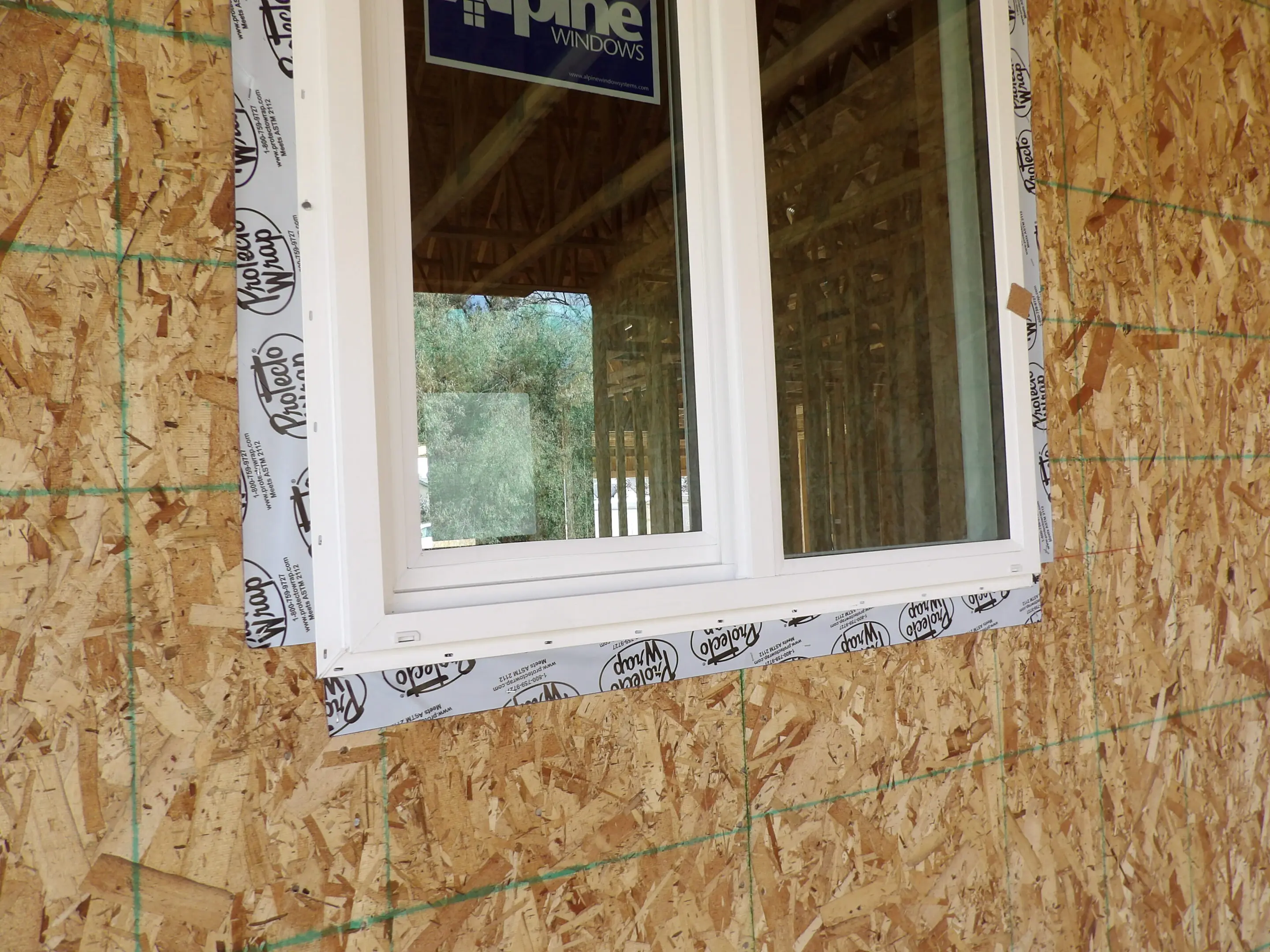
Windows for new construction typically come with a flange so the window can be nailed to the exterior of the sheathing. (Before installing exterior covering, siding, brick, stucco, et.)
The part of the window that slides in to the opening is usually exact, if the window is 5/0 by 4/0, that means the outside of the window frame that will be inserted into the framed opening. Framing for the window needs to be 1/2″ larger than the window to allow for inserting the window as well as shimming. Windows are made square at the factory, Framing may not be perfect. Installation of windows requires “Flashing” which is supposed to help prevent moisture leaking inside of the window, also it is supposed to reduce air movement for energy efficiency. Flashing is an inspection item.
Exterior Doors
Doors also may come in various sizes and styles. For example, 4 panel, six panel, Roman arch, With or with out glass, glass with grid or plane, You can even get doors with shades inside of the glass.
You can get double doors or single doors, Doors with side lite (window at the side of the door included in the door frame.) Doors with transom. (window included across the top of the door)
Door width is usually fairly standard, a 3′ (36″) wide door may be referred to as a 3/0 or a 32″ door may be referred to as a 2/8 which is a 2′ X 6″.
Hinge placement may be referred to as L/H or R/H or simply as LH or RH designating which side of the door the hinges are to be installed. According to the contractor license test it refers to when you are going to open the door the knob will be on the side you will use your hand to open the door toward you, which means the hinge will be on the right side. Most door companies will refer to that as a RH meaning the hinge will be on the right hand side of the door if you are using your left hand to open the door (pull) toward you. Be sure you are thinking the same as the door shop or you may end up with the doors swinging opposite of what you intended. Best to show the door shop the plans. that have been approved by the building department.
Like windows the doors require flashing around the door and will be inspected.
Exterior Wall Coverings
Siding: Common types of siding may be Vinyl, Cement board (Hardy Board) LG Smart side, T-111. metal, (steel).
Vinyl has been the most common for several years. It has advantages that it needs minimum up keep and is quite durable which reduces maintenance. When it does need to be repaired it is easy to remove and reinstalled. Vinyl doesn’t require painting, however it may fade a little over time. Vinyl has for the most part replaced aluminum. Aluminum is still popular for Soffit, Fascia, J channel and some other parts of the siding system.
The disadvantages of Vinyl siding is that when it gets cold it becomes brittle so it is easy to poke holes in it. For example if it gets hit by a rock or a ball.
Dark colors of vinyl siding doesn’t work well if they are very dark colors, the heat from the sun may cause damage. Also one of the most common things that damage vinyl siding is barbecue grilling too close to the house, if you like to grill move the grill away from the siding. Also burning weeds will also melt the vinyl.
Cement board is just what the name implies. It is made of a mixture of cement impregnated with fibers like fiber glass. Don’t worry about asbestos, it has been outlawed for a long time. Cement board is a “lap’ siding which means you start at the bottom row and as you install up the wall you lap the next piece over the last one. Cement board siding is usually purchased as a paint grade product, You can also get it in a wide variety of colors, Search http://www.ir.jameshardie.com.au/
Wood Fiber Lap siding was commonly made of a fiber board like what we always called Masonite siding which is made of wood fibers which are pressed fiber and glue. Cement Board.has for the most part replaced the wood version of Lap siding for siding.
The wood fiber lap siding is still available and may be used in other purposes.
T-111 siding is a 4′ X 8′ plywood type of product with one side with vertical grooves and an attempt to give it a wood grain look was very popular in the 1970x and 1980s. This type of siding was either painted or stained, Either way it requires a considerable amount of maintenance. Re painting, sealing, or re staining. T-111 siding is vulnerable to deterioration and has a relatively short life span as compared to some of the more modern products.
A fiber board type of siding is also available which resembled the T-111 siding was popular in the 1970’s but has fallen out of favor for the same reason of the T-111.
LG Smart Side is newer version of the vertical groove siding. Smart side can be purchased with grooves or with out. It is made of exterior grade OSB (wafer board) and is pre primed . Smart Side is proving to be a relatively inexpensive yet quality and durable wood based product.
Stucco is a concrete product which uses a Lath # Plaster technique for installation so it can either be a smooth sandy texture or the texture can be more aggressive finish. For a long time stucco was considered more for a warm climate product because on its tendency to crack and release from the wall in colder climates. The product has since been reformulated with vinyl and polymers added to the finished mixture which will allow it to expand and contract according to the weather conditions. Stucco is available in a wide variety of colors. Since the improvements Stucco popularity has sky rocketed.
Brick, Has been a staple exterior covering for thousands of years and is still the premium application in modern era and is used in residential, commercial, and industrial applications around the world.
Brick requires a strong stable foundation. Brick is also a structural product which means it adds structural strength to the building. With proper installation Brick buildings will last for centuries.
Stone has also been around since the first humans started moving out of the caves and building living structures. Stone is still a popular building product in our modern era.
In ancient times stone was the main structural part of the building. In our modern times most stone is man made and is more of a facade which means it is more for esthetics. (for looks) Man made stone does very little as far as the actual structural value
Interior Wall Covering
Drywall: By far the most used interior wall covering (covers the studs) is Drywall, Drywall consists of gypsum panels commonly referred to as Sheet Rock, Sheet Rock is actually a brand name and not the actual name of the wall board. The Sheet Rock company doesn’t mind if you call it Sheet Rock, that just reassures them that all of the money and effort to create their brand name is working.
Drywall is a term used for gypsum panels, Hanging, perfataping, mudding, and texturing the walls prior to paint. (spell checking doesn’t understand drywall terms)
Drywall panels come in 4′ X 8′, 4′ X 10′ and 4′ X 12′ sheets in a variety of thicknesses the most common being. 1/4″ 1/2″ 5/8″ The average house uses 1/2″ panels for most wall, exceptions being garages or where fire resistance is required or where structural strength is required . Panels also come treated for moisture prone areas such as kitchens behind sinks & dishwashers, and in Utility rooms behind washer and dryer areas. Bathrooms behind sinks and toilets. Be aware that we are talking about moisture resistant and not water proof. When moisture resistant panels were invented it was common to use it for tile backing. That didn’t work out so well.
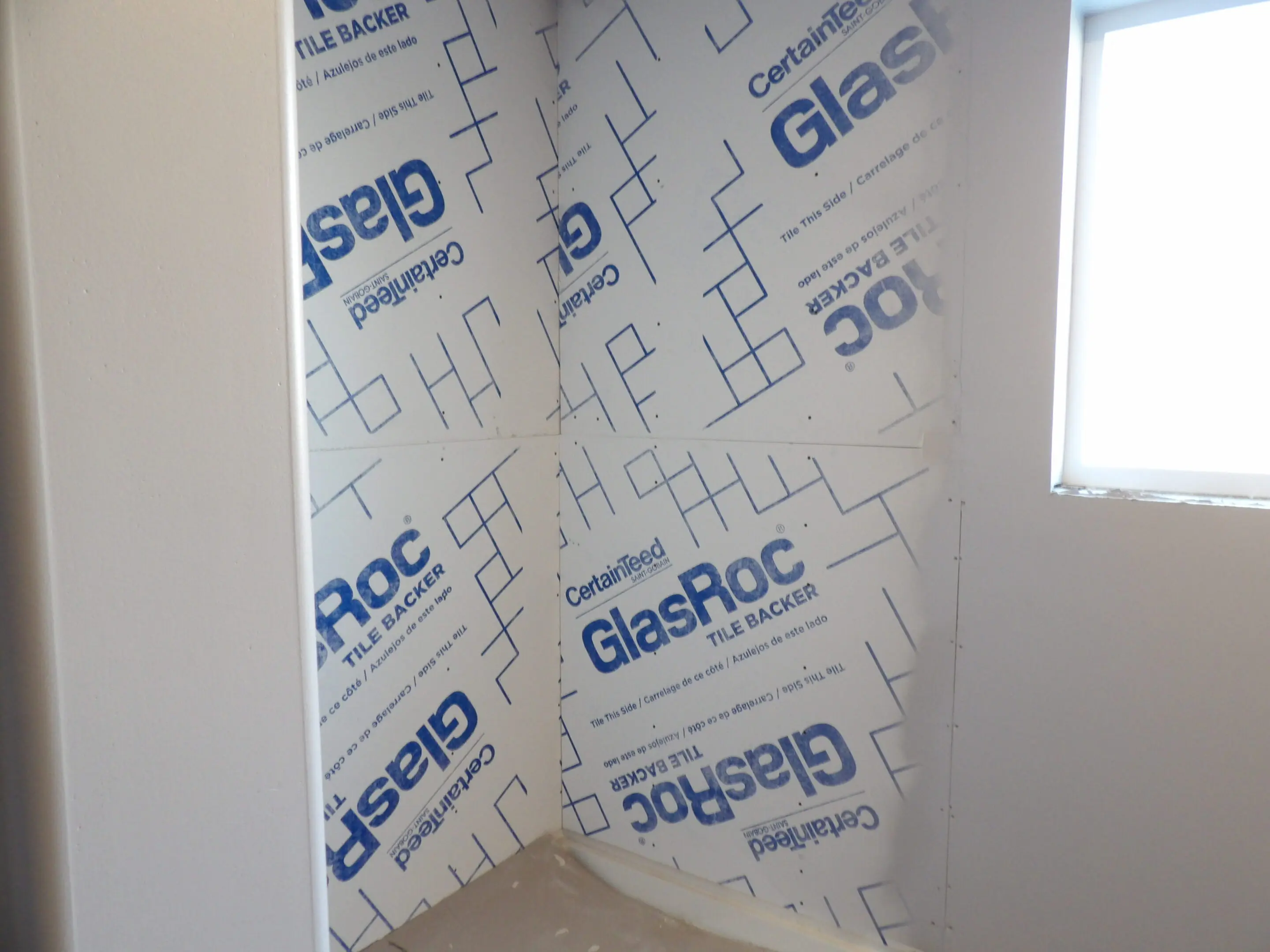
Special coverings are needed where tile will be installed and is usually part of the tile process.
Paneling: In the 1960s, 1970s, and 1980s Paneling was popular, almost every house that was built in that era had some paneling, either as an accent wall or through out the entire house. If the basement was finished paneling was much easier to use than carrying heavy sheet rock down the stairs. Paneling came in 4′ X 8 ‘ sheets and various patterns, colors and textures. Now it is only very limited in what is available. It is still available in bead board design. (For now)
Tung & Groove: Usually 3/8ths thick planks that were installed horizontally, used in a little more expensive house. In those days Mahogany wood was legal to use and it was used in tung & groove panel and other trim through out the house.
Wall Paper: Used in place of paint, drywall panels are needed to support the wall paper and requires a coat of “sizing” then wall paper adhesive. Wall paper used to come on amazing patterns and colors and used to be very popular. It is still available if you can find it.
Lath & Plaster: In the early 1900s before gypsum board was invented the walls were covered in lath & plaster. Lath was strips of wood 1/4″ thick 1 1/5″ wide and 36″ long (about) which were nailed horizontally across the studs. At each stud they used at least 6 tiny nails, then the installer would trowel a layer of concrete type of material over the lath about 3/4″ inch thick, then after that dried he would add a color coat of plaster usually white, Then if a color was desired paint or wall paper was used.
If you ever get a chance to remodel one of those old houses you are in for an experience.
Trim-Finish Carpentry
Doors: Interior May be hollow or solid. They can be made of a wood textured or smooth skin and hollow. Holow core door with a Masonite skin are usually paint grade. Some hollow core door may have ply wood skin or Veneer that can be stained or varnished. Wood skin doors wee popular in the 1960’s and 70’s. Solid wood doors are very expensive and are usually used in upscale houses.
Casing: & Base, Crown Mold: Casing is the trim that goes around the door much like a picture frame. It can either be wood or MDF (Medium Density Fiber) which may be made from recycled paper. Wood may be unpainted or may be primed. MDF usually comes primed.
Railings: Railings are required when stairs or landings are at an unsafe distance from the floor. Railings may be made of many different materials. I have seen wood, iron, glass, cables, and more.
Shelving: Modern shelving is commonly made of Particle Board. Used for closets, pantries. Pretty much where ever you want shelves.
Painting
Painting is one of the things most people think they can do them selves. Is it really that easy?
There are a lot of options in painting. What kind of paint? What quality? What color, Latex or acrylic? Flat, satin, semi gloss, gloss. Do you paint with rollers or with a sprayer?
Paint Qualities. Depending on the usage and impact the paint will need to endure. If the building will be a home for an elderly couple the walls & ceilings won’t typically take as much ware (abuse) as a home with a family.
Some things contribute to the durability such as: Paint ingredients, recommended type of paint for a specific purpose.
Sheen: the sheen contributes to the durability, the shinier the more durable.
Flat paint is often used on a ceiling where it won’t get a lot of wear. It is chalky and easily rubbed off.
Satin paint gives a soft shine look, which may be a little more soothing atmosphere. Works well on smooth wall. (no texture)
Semi gloss gives a medium shine and highlights, nice for textured walls where you want to see the texture.
Gloss gives a shiny surface, This is not very common in residential buildings.
Usage: Where will the paint be used?
Interior: Interior house paint designed for painting sheet rock and trim. Typically a two part application, primer then paint. Primer is designed to penetrate into the surface which gives a good base for the color coat.
Some of the newer paints are supposed to be an all in one, Meaning the primer is supposed to be in the paint. My experience with all in one paint is that it is a less quality paint and requires at least 2 coats of paint.
Exterior: Exterior house paint doesn’t use primer. Exterior paint for houses is designed to b a little flexible so it will expand and contract depending on the weather. It is also designed to be more water resistant. Most other paints are not suitable for painting the exterior of a house, because they will crack with the expansion and contraction of the wood based siding products.
There are a lot of paints that are designed for specific purposes, some for wood, others for metal, plastics, cloth etc.
Woods & Cabinets: There are specific paints depending upon the expected wear. Kitchen and bath cabinets take a lot of use which translates into wear so cabinet paint and clear finish are formulated to hold up better in a kitchen and bath environment. Some times when painting other wood products such as tables, chairs, etc. this is a good choice.
Metal paint: Some metal paint may have rust inhibitors which makes it good for out doors where it will be subject to the weather. For home use any metal paint comes in aerosol cans for easy application. Unless you have a specific use and material you are working with most aerosols can be used on various surfaces.
Varnishes: Usually a transparent finish for use on wood products.
Lacquer: A quick drying product for use on wood, lacquer penetrates into the wood giving the wood a deep rich look and bringing out the natural characteristic of the wood. It dries to the touch in a few minutes. Each coat will self adhere to the former coat eliminating the need to sand between coats, (unless you have runs that need removed) You can get lacquer in satin, semi gloss, and gloss. It is a great go to woodworking finish.
Polyurethane: Poly means it is a petroleum based plastic type of finish. Polyurethane is more durable especially for out door projects. (no finish is indestructible outside. The elements are hard on any finish. Poly urethane doesn’t penetrate well into the wood, tends to stay on the surface. It is not a quick dry product, usually let it dry over night. It is a good product for cabinets that take a lot of use.
Shellac: Is an old style finish, it drys quickly and you can add a second coat with in minutes of the first coat, it works well on craft items such as wood turnings, boxes, and other home made wood projects. Shellac doesn’t stand up well when it gets wet.
Stains: Stains are not a paint, they are pigment that are either in an oil base or water base and are used to simulate various types of wood or just change the color. Stain penetrates deep in to the wood bringing out a lot of the woods natural color which can alter the color of stain. You can get stain in liquid or gel types. Also available are finishes with stain included. If you stain a piece of oak and a piece of pine with the exact same stain you will get two different colors you should use a scrap of wood of the kind you intend to stain and apply a test coat to be sure you are getting the look you want. Stain is not designed to be the finish coat, it is usually used under a varnish type of finish.
Floor Coverings
There are many types and qualities of floor coverings depending on the needs and likes and dislikes.
Tile: Tile is usually a ceramic or stone product of some kind. Tile requires a backing which gives the tile a smooth surface which help prevent uneven tile. The backing is required to be a water proof product because even with the best tile product and grout the grout forms small and sometimes invisible to the eye cracks which make the floor or wall vulnerable to moisture. In this case water is NOT your friend. There is a range of tile backing products, it would be worth it to do your research for these. Tile is required to be sealed with a good quality sealer.
There is a saying “concrete cracks” Tile and grout are a type of a concrete product.
LVP (Luxury Vinyl Plank) LVT (Luxury Vinyl Tile):
LVP and LVT are usually made up of a Vinyl composite material that has a thin surface of a type of plastic. Often during installation the composite gets chipped or larger pieces get broken because the interlocking material is thin and fragile. Usually if a chip or edge of the material gets broken or damaged as long as the surface appears to be in tack the installer will just use the piece and move on to the next piece. So even if the manufacturer claims that the product is water proof doesn’t mean water can’t get through the surface and cause damage to the sub floor or underlayment. When using Luxury Vinyl products in Kitchens and Baths it is wise to use a water proof membrane under the product.
Sheet: Vinyl (linoleum) Sheet flooring comes in large rolls and there are no joints unless the area is very large which requires a seam. Linoleum used to have a paper backing and after years the plastic surface would harden and crack then water could get through and do damage to the underlayment, then to the Subfloor. Water can cause very expensive damage to the floors.
Wood: Wood floors are usually made up of hard wood such as Oak, Maple, Hickory. Most modern Wood floors are pre finished which makes it nice to not have to sand and refinish every couple of years. However even hard woods are NOT milled to be water proof, So the joints are very vulnerable to water damage in Kitchen and bath areas. With out the wood being sanded and have a finish over the entire floor water can easily get through to the subfloor.
Engineered Wood: Is a less expensive way to get the wood look, Engineered Wood is basically ply wood with a veneer then pre finished. Plywood is more vulnerable to moisture than solid hardwood. In my opinion you might as well go with LVP.
Composite: There are some composite products like what has usually been used for commercial purposes like the white tiles in a grocery store (VCT) which are a glued down surface.
Concrete: It has become common where there are concrete floors to just smooth the surface and apply a sealer, we see this in commercial businesses a lot now.
Cabinets
Cabinets come in a variety of styles, shapes, sizes, and colors. Some may be Hard wood, some may be particle board with a veneer. Some may be an in expensive wood that are painted. (Paint grade are typically particle board or MDF) MDF is Medium Density Fiber and is usually recycled paper products. You may have to do a bit of work and research to find the cabinets you want. Most Cabinet shops have their specialty so you may have to shop around.
Counter Tops
Counter tops are placed on top of the cabinets (as if you didn’t know that) which is what you have to have to hold up sinks and clutter.
Counters are more commonly being made of stone these days. Most stone counters are referred to as “granite” which is incorrect. Granit is made up of small stones about the size of BB’s or Peas commonly grey and white unless they have been colorized. There are other rock products besides granite that have a lot more pattern, and there are quartz. Counter tops can be purchased through the cabinet shop or at least the cabinet people can steer you to some one that does counters.
Other types of counters are usually man made like the laminate which are particle board or MDF with a plastic veneer. Commonly referred to as Formica. Formica is actually a brand name we use a lot because it is one of the first laminate products and it became famous so now it is a common name. There are man made products such as Resin that can be made in many colors and patterns.